
Let us get one thing clear. If this wasn’t a Steven Spielberg film, it would fly far under the radar and be forgotten about within a matter of months. A host of Academy Awards and Golden Globe nominations would be a pipe dream.
It very much is a Spielberg movie, however, and was always destined to be treated as such no matter the end product’s quality. As fate would have it, what set out to be a fitting self-tribute to one of the industry’s greatest directors quickly meanders into a stereotypical high school drama.
That decision is a strange one, because the opening promises so much. A young boy with two loving yet contrasting parents and a desire to exert control over everything in his life, highlighted by his obsessive filming of a model train – that’s an interesting premise.

However, the set-up never pays off. There are some intriguing plot points, with a young Spielberg (sorry, young Sammy Fabelman) stumbling across his mother’s affair perhaps the best explored.
But the turning point comes when the family uproots and moves to California, unleashing a Pandora’s box of we’ve-already-seen-this-a-millon-times material.
The white-skinned, blonde-haired jocks are racist bullies (but one of them is really half-decent deep down). The good looking girls take a liking to the dorky protagonist despite his complete lack of awareness. Said dork blames his parents for everything. It’s nothing new, and we expected better.
Gabriel LaBelle’s annoyingly mediocre performance in the lead role doesn’t help. He doesn’t do much to endear himself, coming across as a somewhat whiney and spoiled teenager, and only truly shines in his film-making scenes.
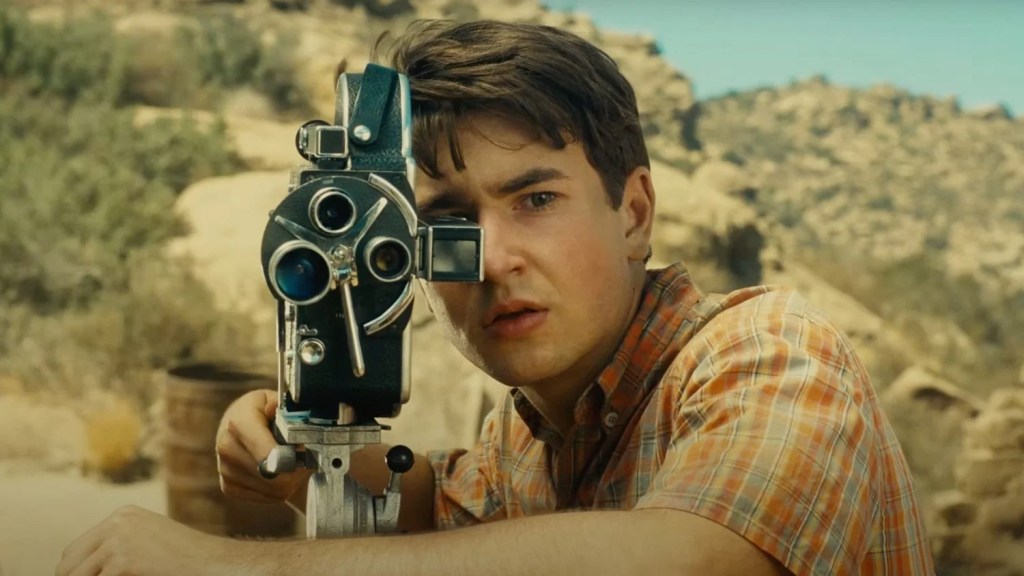
Spielberg obviously tries to use the opportunity to over-egg his personality as a youngster. It’s clearly his way of saying: “I was a misunderstood genius at school. I should have been one of the cool kids. The good looking girl should have stuck with me. I just got it.”
The man is a genius and has earned his shot at glorifying himself more than most, but he could have done so with subtlety. It’s all a bit on the nose throughout The Fabelmans – most character development is blurted straight out loud for all to hear.
It doesn’t matter if it’s young Fabelman’s deranged mother, robotic father or way-too-young-to-have-this-kind-of-knowledge sister – they’re all on hand to spoon-feed the audience exactly what Spielberg wants us to hear.
The film is propped up by sublime performances from Michelle Williams and Paul Dano. Both play their roles to perfection; Williams stars as a deranged mother who you can’t help but feel sorry for even in her darkest moments, while Dano expertly balances his character’s selfish career drive and emotional shortcomings.

As you’d expect from a film about a film-maker, The Fabelmans is well produced. It looks the part and radiates a sense of warmth, particularly during the accounts of its young protagonist shooting his earliest scenes.
It gives a sneak peak into just how difficult it is to create the smallest of screenplays, nevermind the international blockbusters that made Spielberg a household name. You can tell he revels in these moments, conveying the love he has for his craft.
Unfortunately, the majority of the film is rather over-indulgent. Perhaps we should have guessed it would be right from the off – a thank you message from the director before it even kicks off pulls you out of the moment. If you’re going to do that, just have the lead character named Steven Spielberg rather than Sammy Fabelman.
There are attempts to pay tribute to the art of cinema itself – and while there is some success, Damien Chazelle’s Babylon did a much better job at it.

It’s somewhat fitting that what may end up being one of Spielberg’s final acts will most likely dominate awards season. It’s just a shame he couldn’t create something more impactful for the big occasion, as he so often has.
Rating: ★★☆☆☆
Feature Image: The Big Issue
 A Critical Eye