
The build-up; the tension; the heightening score. The countdown itself. We, the audience, brace ourselves for impact just as the characters do the same. Arm rests in cinemas across the globe shudder as our fingers grip them ever tighter.
And then… silence. The test bomb goes off with a beautiful explosion of colour and, in the seconds before the blast reaches our ears, it feels almost bliss.
Perfection.
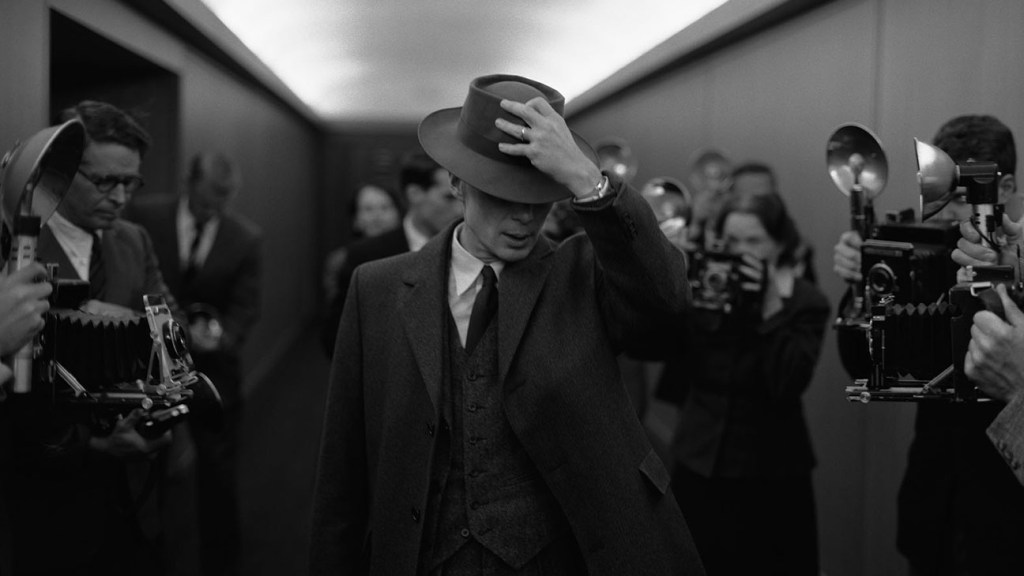
Christopher Nolan’s Oppenheimer is a work of art. After the somewhat divisive Tenet’s release in 2020, the director had a number of critics to silence – and he has duly zipped their mouths shut and thrown away the key. This is the film of the year.
An eyewatering spectacle fron start to finish, Nolan throws all of his favourite ingredients into the mix. It’s a joy to watch, with each and every scene carefully crafted for a highly anticipated IMAX roll-out. The close-ups, the practical effects and the horror-inducing imagery all engrain themselves in our minds.
Head and shoulders above even those stunning visuals, however, are a collection of masterful performances. Cillian Murphy more than steps up to the plate after finally being afforded the opportunity to lead a major blockbuster, putting in nothing short of a scintillating display.
He conveys everything from the bright, cocky mindset of an enthusiastic young scientist to the nightmares that come with being the father of the atomic bomb with world class precision. Often, he needs no words – with nothing more than haunted eyes and a crestfallen face, he gives us an incredible insight into a man whose moral conundrum we can’t even imagine.

If Murphy is not a frontrunner for Best Actor at next year’s Oscars, the collective gasp of outrage may be just as loud as that bomb. There will be similar offence taken if co-stars Emily Blunt and Robert Downey Jr aren’t there with him.
Downey Jr is a particular stand-out in Oppenheimer. His portrayal of Lewis Strauss slowly bubbles away, simmering quietly and sternly until a final detonation of sheer rage towards the end of the final act. All of his talent is on show.
Blunt is in fine form herself, capturing all of the anguish that would come with being married to a man in the titular character’s position, while Matt Damon puts in a solid if slightly stereotypical showing as General Leslie Groves Jr. Tom Conti was an inspired choice to play Albert Einstein.
Nolan’s movies have a habit of being set to the backdrop of a colossal score, and Ludwig Goransson steps up to the mantle to produce yet another one here. The music suits the film down to a tee – it is haunting throughout and really adds to the tension at all the right moments.

Meeting Kitty, Manhattan Project, Trinity and Destroyer Of Worlds are notable highlights in the soundtrack, contributing to our ever-increasing anxiety as things progress.
Some viewers have voiced frustrations that Oppenheimer doesn’t adequately showcase the horrors experienced by the Japanese people following the dropping of both atomic bombs, but those complaints completely miss the point.
Oppenheimer and his carefully curated team of scientists did not get to see the damage their work contributed to first-hand, and so neither do we. In fact, the majority of the American population had no idea themselves about the effects of the bombings until months or years later – or at least they were blind to them until granted a new perspective.

Instead, we are given insight into the mental trauma Murphy’s character goes through – and Nolan presents us with an unanswered puzzle, as he often does, on whether or not he really regretted his actions. A geniusley abhorrent scene in which Oppenheimer celebrates the bombings while simultaneously experiencing visions of their victims gives us some clues.
Not many directors, if any others, have the power to achieve what Nolan has here – an in-depth character study on the grandest, most ambitious scale imaginable. The movie is everything we hoped it would be. This is cinema.
The test scene itself may well go down as one of the greatest sequences in history. It is constructed with the science of a bomb-maker, but with the love and care of an artist. We knew that the explosive was always going to go off, and yet we are drawn in like unwitting flies to a spider’s web.
And that is the true success of Oppenheimer; while still giving Nolan the chance to play to his blockbuster strengths, he puts together a biopic which still feels up close and personal.
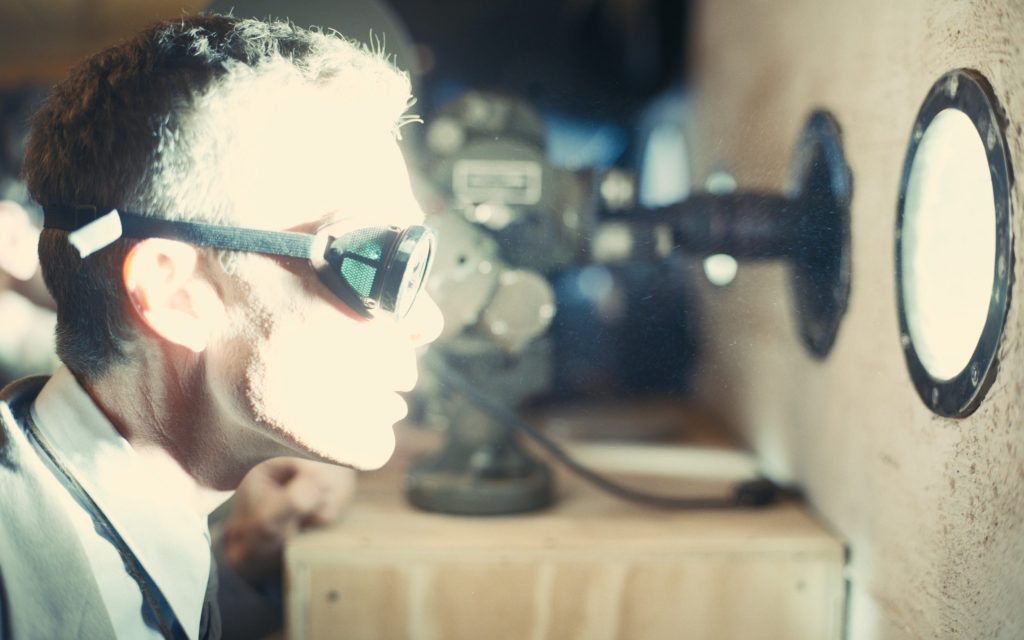
The final line, delivered expertly by Murphy, brings the curtain crashing down on a mind-bending narrative in momentous fashion. It’s powerful and terrifying all at once.
Nolan says he believes Oppenheimer to be the most important person who has ever lived, and the director’s latest masterpiece reflects that. Just as the atomic bombs did – although not quite to the same extent – this film will go down in history.
Rating: ★★★★★
 A Critical Eye
2 thoughts on “A triumph in cinema: Oppenheimer is a masterpiece”