
Yes, she’s as good as everybody says she is. Emma Stone has well and truly cemented her status as one of her generation’s finest actresses with her jaw-dropping performance in Poor Things.
In a visually stunning film packed full of colourful sets, laugh-out-loud moments and thought-provoking dialogue, Stone steals the limelight. She weaves effortlessly between playing a bumbling and physically awkward Bella Baxter and the growing-in-confidence, sexually-charged character she becomes.
There is nothing easy about playing a woman brought back to life using the brain of her unborn baby (it’s as mad as it sounds), but Stone has always had a knack for bringing slightly unpolished parts to life in an entirely relatable fashion. As the movie’s plot gets madder and madder, she both keeps up with the craziness and tones things down at the right moments to keep things grounded. An Oscar for Best Actress would be more than warranted.

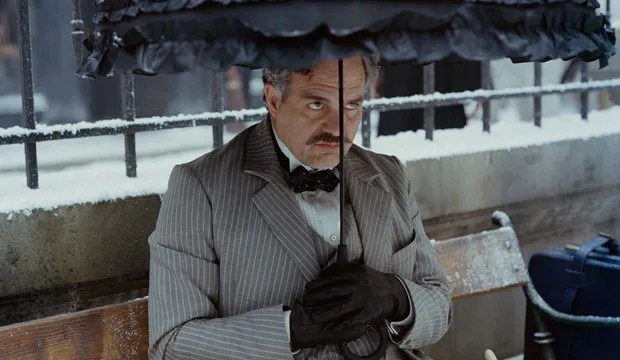
She might not be alone on the podium, either. Mark Ruffalo also puts in what may be the comedic turn of his life as Duncan Wedderburn, transitioning from a cocky bachelor into a raving lunatic as he seeks to put a leash on Bella. There are plenty of laugh-out-loud moments.
Robert Downey Jr’s outing in Oppenheimer may have been just too good, but Ruffalo has done himself no harm whatsoever and fully deserves his own nomination for Best Supporting Actor.
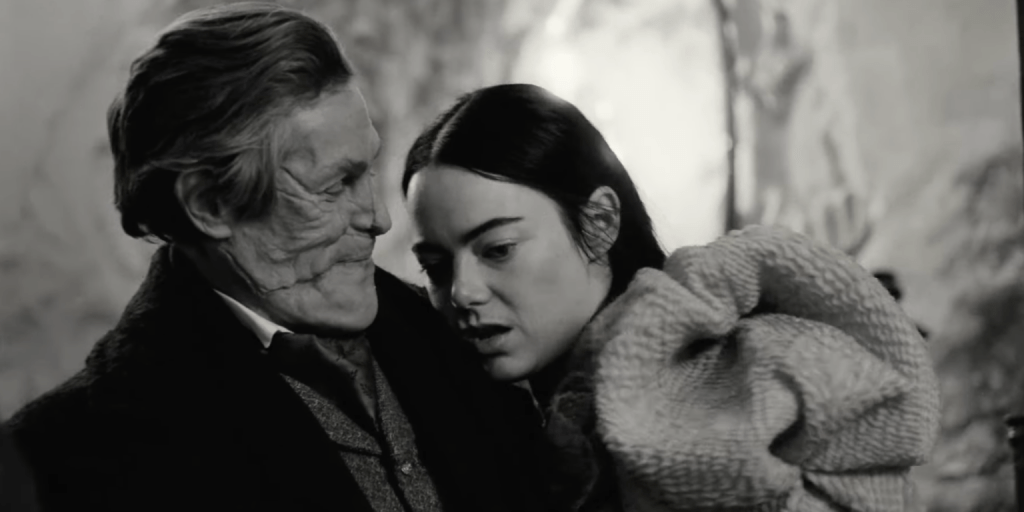
Willem Dafoe proves he still has what it takes as well, and is at the heart of some of Poor Things’ most touching moments – particularly as the film draws to a close.
Three outstanding performances aside, the movie is one of the most stunning and unique we have witnessed in recent times. Care has gone into every single scene, every single shot; the angles inside Godwin Baxter’s mansion are particularly striking, as though they have been filmed through a distorted telescope of some sort.
It’s hard to put your finger on just what makes the visuals so stunning, but every decision suits the film down to a tee. The greys of her caged home life in London contrast wonderfully with the bright sets of Lisbon, Paris, et al. It truly engrosses you in the colourful world of Bella Baxter.

Jerskin Fendrix’s score does much the same, simultaneously leaving you feeling on edge with haunting strings while also making you swell with a strange sense of joy.
Poor Things does lose its way towards the end of the screenplay. The eleventh hour conflict involving Alfie Blessington, played by Christopher Abbott, feels forced and unnatural, and concludes with far too much of a rush.
The ideas behind Bella having killed herself in her past life to escape his cruel treatment could have been interesting if explored in more depth, but not enough time is dedicated to this segment of the film.
A number of relationships are left far too underdeveloped as well; Bella’s romance with Max McCandless, for instance, has very little substance behind it, leaving us yearning for a more satisfying conclusion.
Despite that, the Oscar nominations speak for themselves. Poor Things is a wonderfully unique piece of cinema, and its critical and commercial response is testament to how well it has gone down with audiences so far. Let us hope its ingenuity is commended at the Academy Awards.
 A Critical Eye